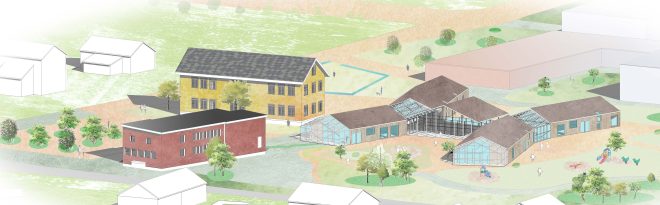
The new Nidarvoll barnehage is located at Sluppen, 3.5-kilometer away from Trondheim city centre. The design features a kindergarten, two heritage buildings, and the overall design program is driven by lowering carbon emissions throughout the design process from site scale to neighborhood scale. The proposed refurbishment scheme on listed buildings (gulhuset) is a new meeting point for residents, visitors and employees in Sluppen. The other heritage building (gymbygget) is integrated into the kindergarten to bring up the awareness and presence of its value among school employees and toddlers.
LCA of Existing Buildings
Block A


Block B


Block C


Block M


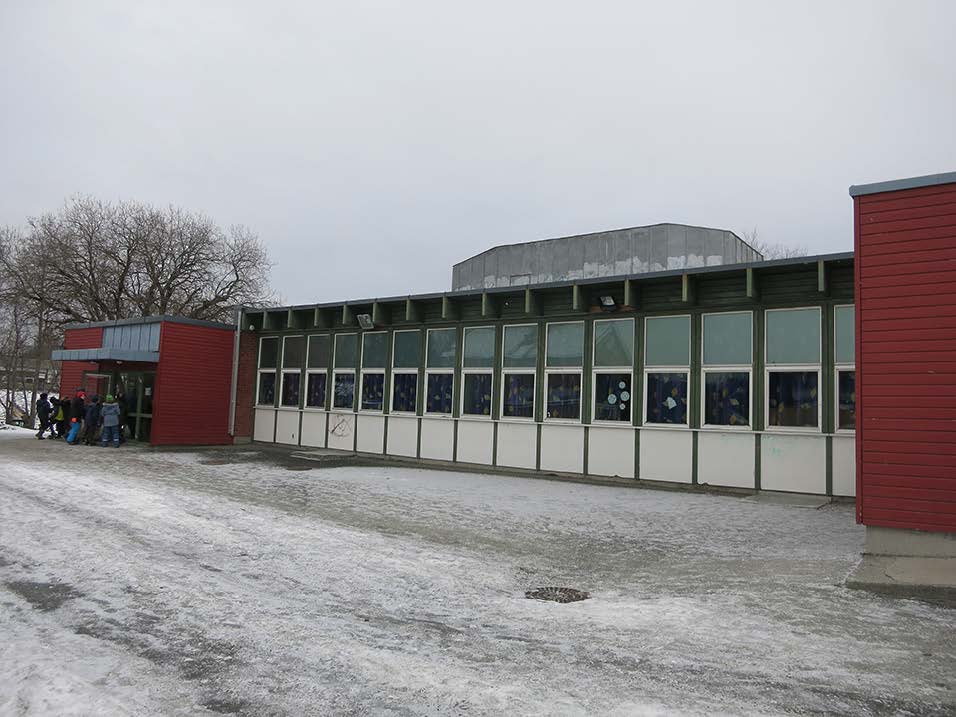
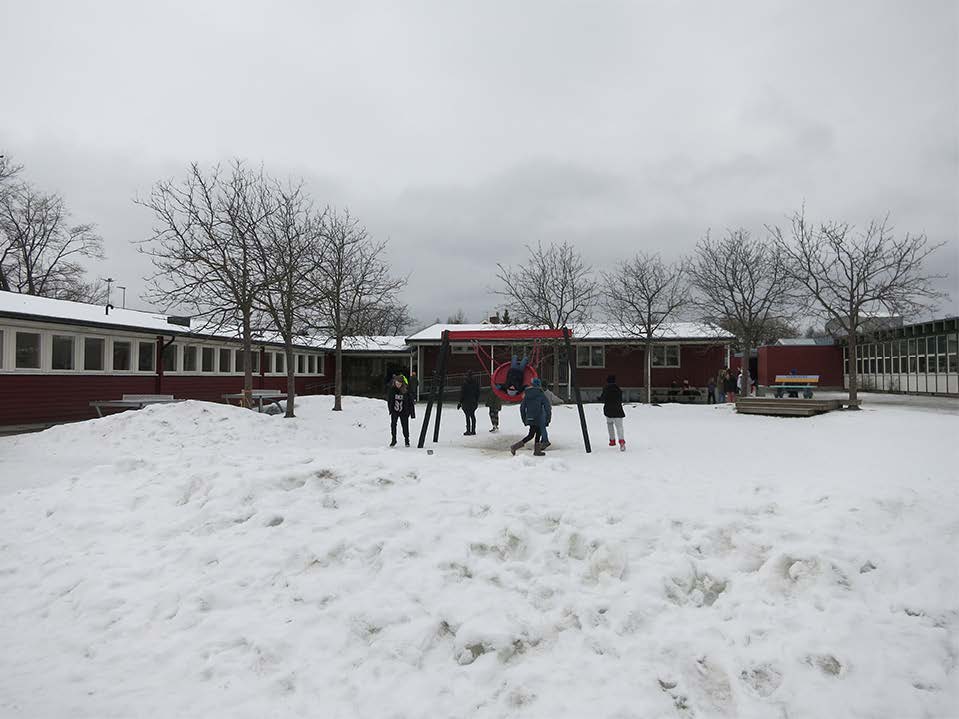
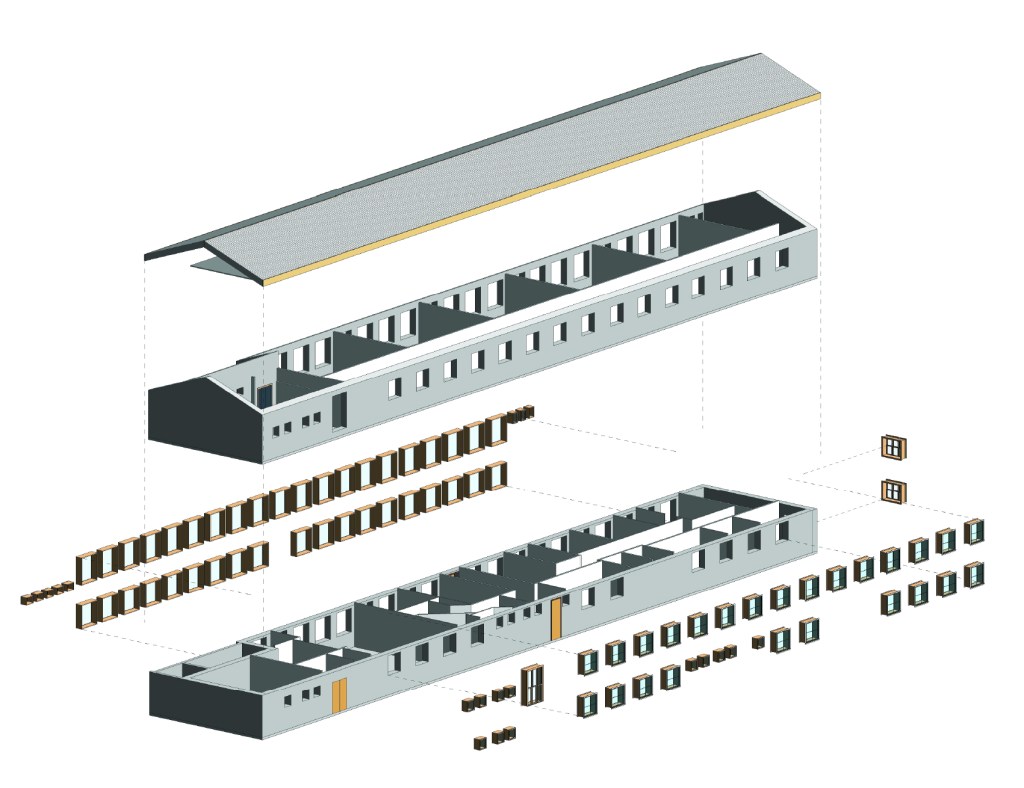
To decide, which buildings on the site should be kept and which ones aren‘t worth keeping, a Lifecycle Analysis has been carried out. As the end-of-life stage is only producing a very low percentage of CO2 emissions compared to the other stages, it was decided to remove, recycle and reuse the material of the Block A, B and C. The basement of the first two will be kept in-tact, as the production of concrete is very energy-intensive and it is not easy to recycle it properly. The windows of the buildings will be reused for the fence running along the borders of the school in order to let the children be connected to their surrounding. The interior walls of the kindergarten will also have some windows from these buildings. The concrete of the Block C will be used for the pavement of the new built infrastructure in Sluppen. The rest shall be processed, recycled and reused in new concrete or as layer in street construction. The wooden cladding of the Block B can be used for the roof of the parking area in the north of the site. Other parts can be used to build playground equipment for the kindergarten.
Energy Sharing

The figure shows a comparison between the occupancy and PV production of different buildings. Based on the study, it was proposed that the residential zone next to the kidergarten will supply DHW during daytime and in after-hours, the kindergarten will supply PV electricity for the neighbourhood.
Retrofit of Gulhuset

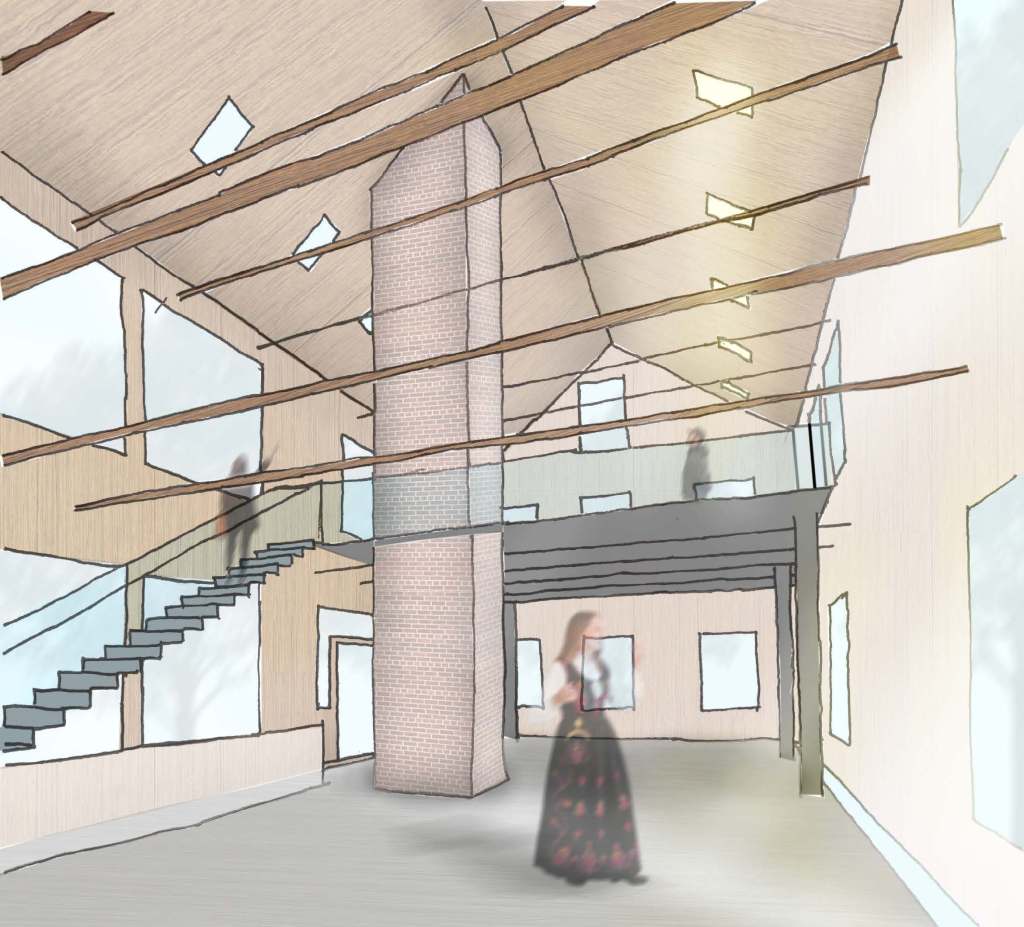
Gulhuset is a category B protected heritage building under Riksantikvaren. As a strategy to draw attention to it, all internal walls and floors will be removed except the load-bearing structure, the roof and beams. The floors will be detached from this old structure and put onto a new, very light and thin steel structure, making it a museum exhibiting itself.
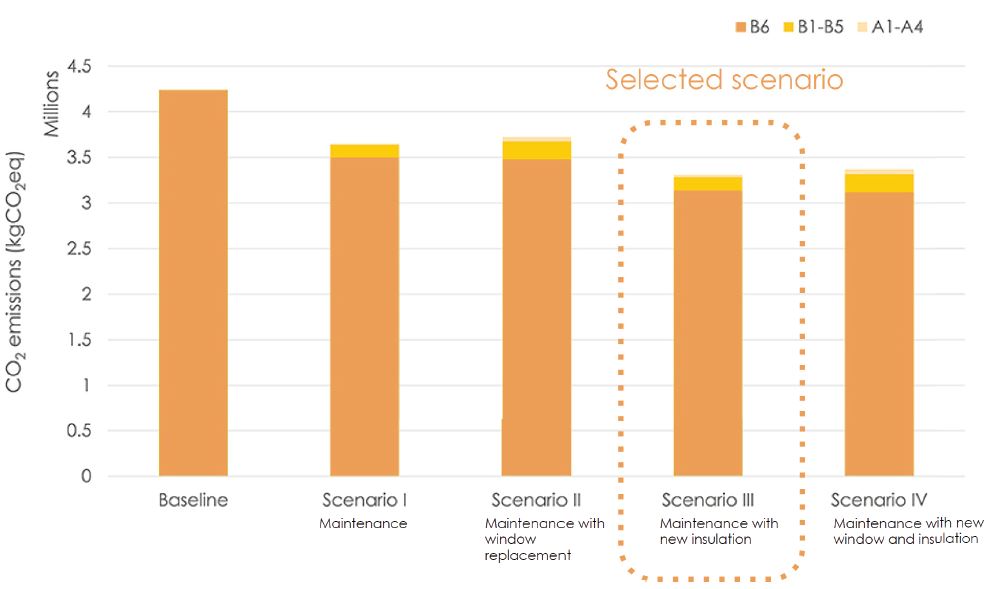
It was observed that operational energy emissions (B6) were significantly greater than the product stage, transportation to site, maintenance and replacement stage emissions combined. Although replacement of DGUs by TGUs reduces the operational energy emission slightly, the high embodied emission of TGUs result in a higher total emission. The cummulative emissions for each scenario were plotted to fi nd the scenario with least emissions. The Scenario III was found to have 22% lower emissions compared to the Baseline. The values are shown below.

Passive Strategies

There were developed some passive strategies to improve the indoor climate of the kindergarten without needing energy. In summer, the roof connecting the two buildings with each other protects the glass parts from overheating. Furthermore, through the glaced part, excess heat can escape. To make use of the wind coming mainly from the east, the windows on the east and west side of the building can be opened to allow natural ventilation in automn and spring. In winter, the greenhouse effect in the wintergardens catches heat that can be used to heat the building itself.
LCA of Proposed Kindergarten
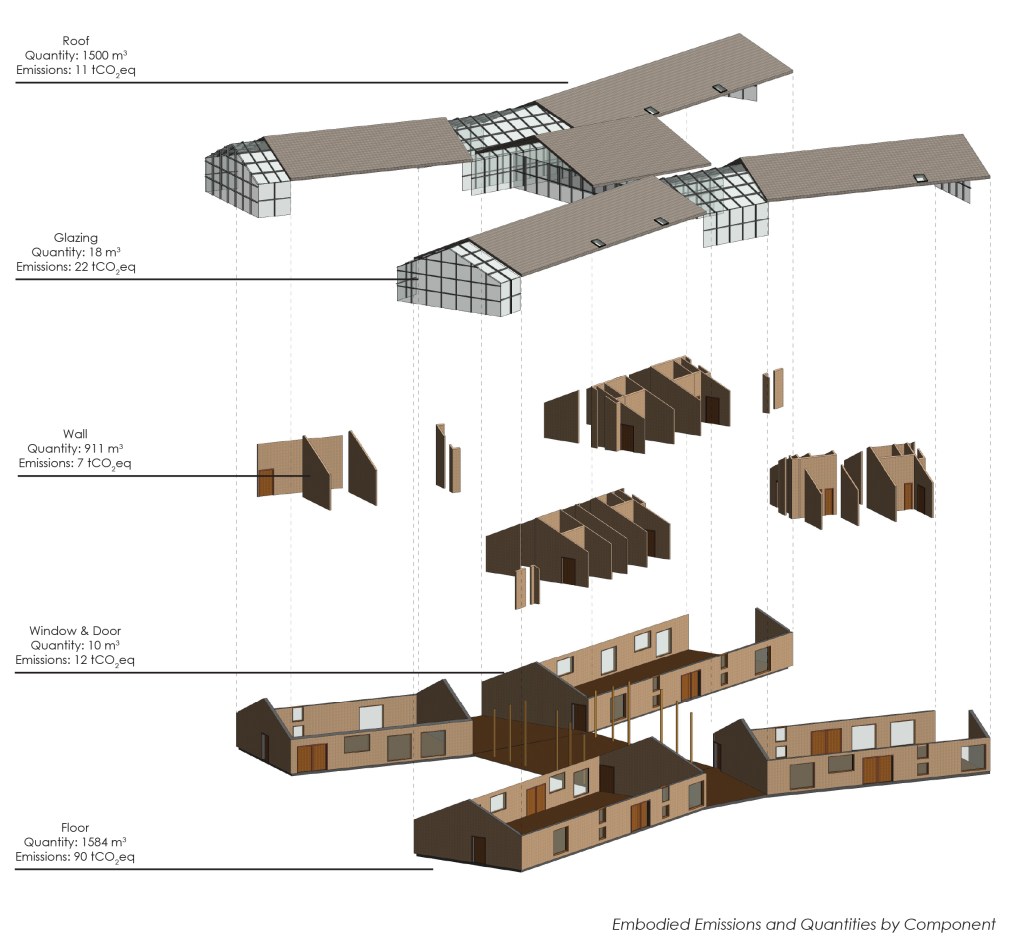
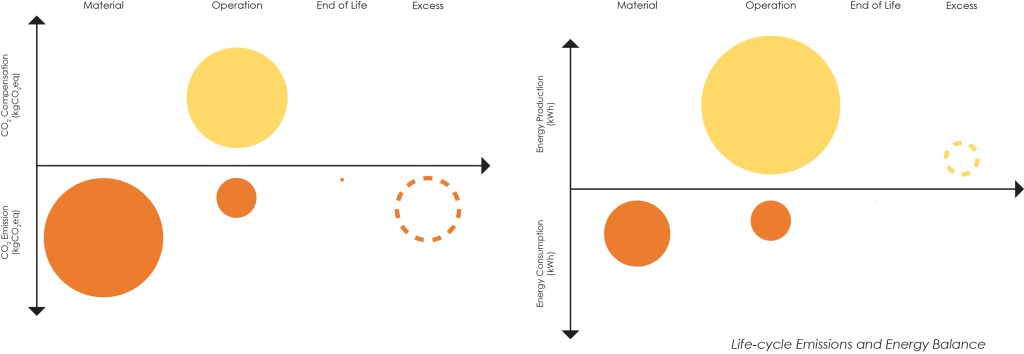

The proposed kindergarten building is a ZEB-O÷EQ building and Plus Energy building. It was also observed PV panels were responsible for 73% of material CO2 emission which raises the question of whether renewable energy should be produced at building scale or neighbourhood scale.
 Klima design